
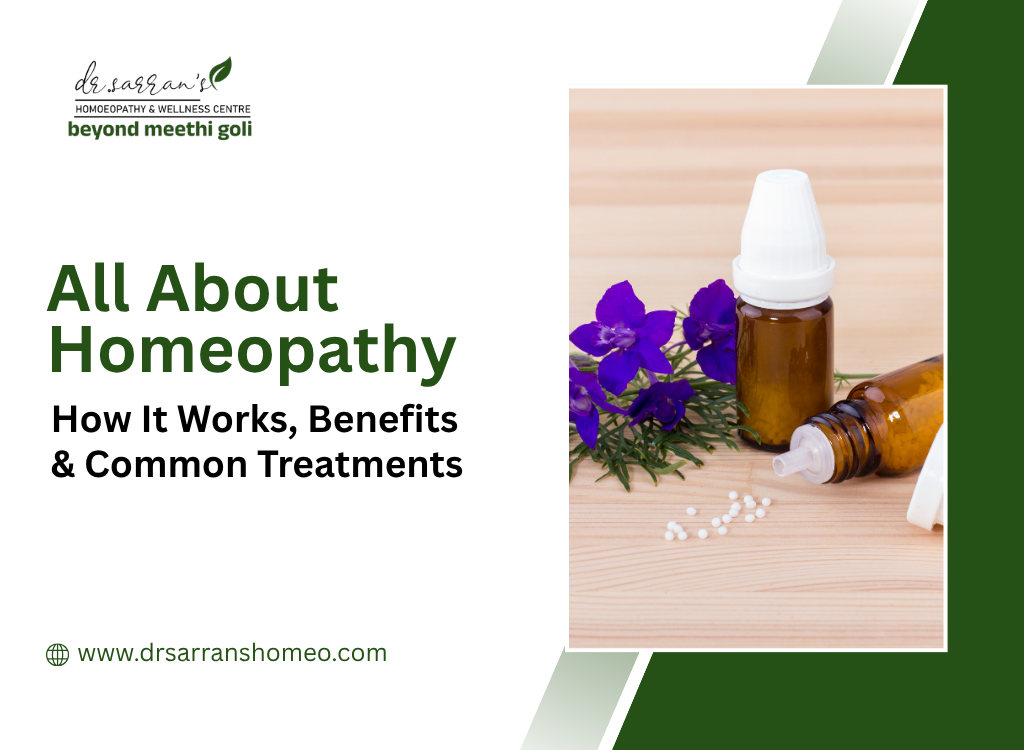
All about homeopathy starts with one core idea: treating the whole person, not just isolated symptoms. This 200-year-old system of natural medicine uses highly diluted substances to support the body’s own healing response, and it remains widely practised across India today, regulated by the Ministry of AYUSH.
Whether you are completely new to homeopathy or exploring it after hearing about it from family or friends, this guide covers everything you need to know, how it works, its genuine benefits, and the conditions it commonly supports.
What Is Homeopathy? Understanding the Basics
Homeopathy is based on the principle of “like cures like,” developed by Dr. Samuel Hahnemann in the late 18th century. The idea is that a substance capable of causing symptoms in a healthy person can, in a highly diluted form, help stimulate healing in someone experiencing similar symptoms.
Key principles include:
- Individualisation: Two people with the same diagnosis may receive different remedies based on their unique symptom pattern.
- Minimal dosing: Remedies are prepared through repeated dilution, intended to minimise side effects.
- Whole-person focus: Physical, emotional, and lifestyle factors are all considered during treatment.
This foundational approach is what makes learning all about homeopathy so different from understanding conventional medicine, which typically targets a specific diagnosis directly.
Homeopathy also uses the concept of potency, referring to how many times a substance has been diluted and shaken during preparation. Lower potencies are often used for physical, localised complaints, while higher potencies are typically reserved for more established or emotionally layered conditions, always selected by a trained practitioner rather than chosen at random.
How Does Homeopathy Actually Work?
Homeopathic remedies are prepared through a process called potentisation, involving repeated dilution and vigorous shaking at each stage. Practitioners believe this process retains a therapeutic “memory” of the original substance while removing harmful concentrations.
A homeopathic consultation typically involves:
- A detailed discussion of your current symptoms
- Questions about your emotional state, stress levels, and daily habits
- Review of your medical and family history
- Selection of a remedy matched specifically to your overall pattern, not just your diagnosis
This process is fundamentally different from picking a medicine off a shelf for a specific ailment, which is central to understanding all about homeopathy as a genuinely personalised system of care.
Is Homeopathy Scientifically Proven? An Honest Look
It is worth addressing this directly. Large reviews by bodies such as Australia’s National Health and Medical Research Council and the US National Center for Complementary and Integrative Health have found no strong, consistent scientific evidence that homeopathic remedies outperform a placebo for specific diseases.
At the same time, homeopathy has a long clinical history and remains a government-regulated system of medicine in India, used by millions of people for everyday and chronic complaints. Many patients report genuine, noticeable improvement over time, particularly for stress-related and chronic lifestyle conditions.
A fair way to understand this: homeopathy works best as a gentle, supportive, low-risk approach, especially when combined with healthy lifestyle habits and honest guidance from an experienced doctor who sets realistic expectations.
Key Benefits of Homeopathic Treatment
People continue choosing homeopathy for several practical, well-documented reasons.
- Minimal side effects: Remedies are highly diluted and generally well tolerated by most patients.
- Personalised care: Treatment plans are built around your complete symptom picture, not a single complaint.
- Non-invasive approach: No injections or surgery involved, appealing to patients who prefer gentler options.
- Suitable across age groups: Commonly used for children, adults, and elderly patients under proper guidance.
- Long-term, whole-body support: Considers mental, emotional, and physical health together rather than in isolation.
- Complements conventional care: Often used alongside conventional treatment for a more complete approach.
Common Conditions Homeopathy Is Used For
Patients typically explore homeopathic treatment for a wide range of everyday and chronic concerns, including:
- Skin conditions such as acne, eczema, and psoriasis
- Allergies, recurring colds, and sinus complaints
- Digestive issues like acidity, bloating, and irritable bowel patterns
- Hormonal concerns, including PCOS-related and menstrual symptoms
- Stress, anxiety, and sleep-related difficulties
- Joint discomfort and general fatigue
These are supportive, symptom-management goals rather than guarantees. Serious, emergency, or rapidly worsening conditions always require conventional diagnosis and appropriate medical treatment first.
Homeopathy vs Conventional Medicine: A Quick Comparison
| Factor | Homeopathy | Conventional Medicine |
| Approach | Whole-person, individualised | Disease and diagnosis focused |
| Speed of action | Usually gradual | Often faster for acute conditions |
| Side effects | Generally minimal | Varies by medication |
| Best suited for | Chronic, lifestyle, supportive care | Acute, emergency, surgical needs |
| Regulation in India | AYUSH-regulated, licensed BHMS doctors | Regulated by Medical Council/NMC |
Many patients today use both systems together, under professional guidance, rather than choosing one over the other exclusively.
Common Myths About Homeopathy, Clarified
Myth: Homeopathy works instantly. Reality: Most conditions, especially chronic ones, need weeks to months of consistent treatment to show meaningful change.
Myth: Homeopathy has no regulation. Reality: In India, homeopathy is officially regulated under AYUSH, and practitioners require a formal BHMS degree.
Myth: Homeopathy can replace all conventional treatment. Reality: It works best as a supportive, complementary option, particularly for chronic conditions, not as a replacement for emergency or critical care.
What to Expect During Your First Homeopathic Consultation
A first visit typically includes a detailed conversation about your symptoms, lifestyle, and health history, often lasting longer than a typical conventional appointment. Your doctor will explain your remedy, expected timeline, and how to take your medicine correctly.
If you are exploring homeopathy for the first time, consulting the best homeopathy doctor in Mumbai for your specific concern ensures your treatment plan is accurately matched to your individual needs from the very first visit.
Why Choose Dr. Sarran Dhillon Homeopathy Clinic

As a trusted homeopathy clinic in Juhu, Dr. Sarran Dhillon Homeopathy Clinic focuses on detailed case-taking, transparent conversations about realistic outcomes, and personalised treatment plans built around each patient’s daily life rather than generic protocols.
Patients across the city continue to trust our clinic precisely because of this honest, attentive approach to every consultation, whether the concern is a minor seasonal complaint or a long-standing chronic condition.
How to Decide If Homeopathy Is Right for You
Consider the following before starting treatment:
- Is your condition chronic or lifestyle-related rather than an emergency?
- Are you looking for a gentle, low-side-effect option to complement existing care?
- Are you comfortable with a treatment approach that may take weeks to show results?
- Do you want a doctor who is transparent about evidence and realistic expectations?
If most of these apply to you, a consultation is a reasonable next step.
Frequently Asked Questions
What is homeopathy and how does it differ from conventional medicine?
Homeopathy uses highly diluted natural substances and a whole-person approach, while conventional medicine typically targets a specific diagnosis directly with pharmaceutical treatment.
Is homeopathy safe for children and elderly patients?
Yes, homeopathic remedies are generally gentle and well tolerated, though dosage and suitability should always be confirmed by a qualified BHMS doctor.
How long does homeopathic treatment usually take to show results?
Most chronic conditions take several weeks to a few months, since homeopathy focuses on gradual, root-level improvement rather than immediate symptom suppression.
Can homeopathy be combined with conventional medicine?
Yes, many patients use both under professional supervision, and a good homeopathic doctor will guide you on safe, coordinated care.
What conditions is homeopathy commonly used for?
Homeopathy is commonly used for chronic skin conditions, allergies, digestive issues, hormonal concerns, and stress-related complaints, always alongside appropriate medical evaluation when needed.
Conclusion
So, what is all about homeopathy really about? It is a personalised, whole-person system of medicine that focuses on gentle, long-term support rather than quick fixes, backed by official regulation in India and a long clinical history, even as mainstream scientific evidence for specific outcomes remains limited. As an experienced homeopathy doctor in Juhu, Dr. Sarran Dhillon continues to guide patients toward realistic, well-informed treatment decisions for a wide range of everyday and chronic health concerns.
Ready to Explore Homeopathy for Yourself?
If you want a personalised, honest introduction to homeopathic care, the Juhu best homeopathic doctor for your needs is just one consultation away. Book an appointment at Dr. Sarran Dhillon Homeopathy Clinic in Juhu, Mumbai, today and start your treatment journey with clarity and confidence.