
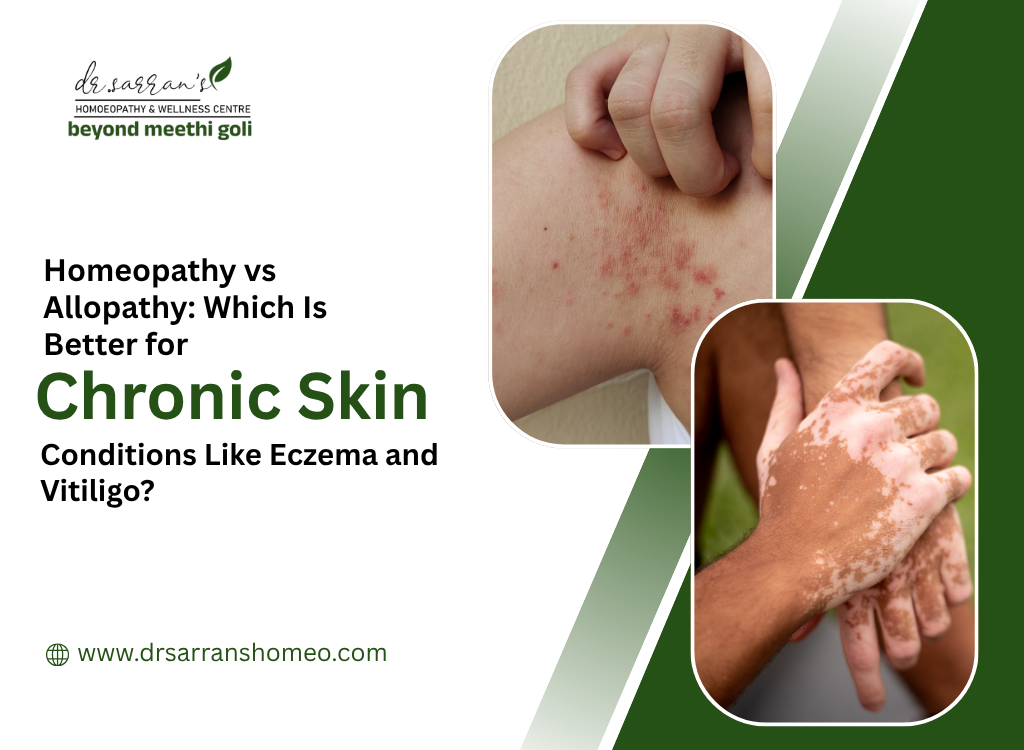
The homeopathy vs allopathy debate comes up often among patients managing chronic skin conditions like eczema and vitiligo. There is no single, universal answer, since the better choice depends on your specific condition, severity, treatment goals, and how your skin responds over time. In many cases, the two approaches work best together rather than as competing alternatives..
Understanding Homeopathy vs Allopathy: The Basic Difference
Before comparing outcomes, it helps to understand how these two systems approach treatment differently.
Allopathy, or conventional medicine, typically targets the specific disease mechanism directly. For eczema, this often means anti-inflammatory creams or immune-modulating medication, while vitiligo may be treated with steroids, light therapy, or newer topical medications.
Homeopathy, on the other hand, takes a whole-person approach. It considers your overall constitution, immune tendencies, stress levels, and symptom pattern, aiming to support the body’s natural regulatory response rather than only targeting the visible skin issue.
Neither approach is inherently “wrong.” They are simply built on different philosophies of healing, which is exactly why the homeopathy vs allopathy comparison needs to be condition-specific rather than a blanket judgment.
It also helps to remember that both systems are formally regulated in India, with allopathic doctors overseen by the National Medical Commission and homeopathic doctors overseen by the Ministry of AYUSH. This means both are legitimate, licensed paths of care, and choosing between them should come down to your specific needs rather than dismissing either system outright.
Homeopathy vs Allopathy for Eczema: What the Evidence Shows
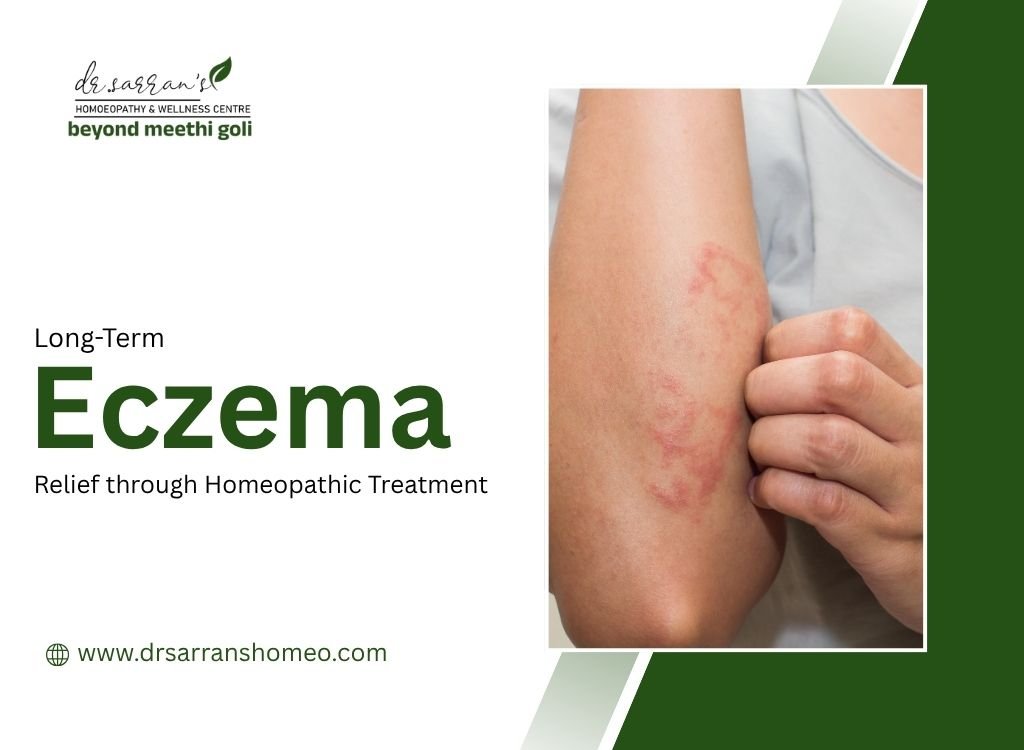
Eczema, or atopic dermatitis, is a chronic inflammatory skin condition with flare-ups often triggered by allergens, stress, or dry weather.
Allopathic treatment for eczema typically includes:
- Topical corticosteroids to reduce inflammation quickly
- Moisturisers and barrier-repair creams
- Antihistamines for itching
- Newer biologic medications for severe, treatment-resistant cases
These treatments have strong clinical evidence and often provide fast, reliable relief during active flare-ups.
Homeopathic treatment for eczema focuses on:

- Identifying individual triggers and constitutional patterns
- Gradually reducing flare-up frequency over time
- Supporting skin healing with minimal side effects
- Addressing stress and lifestyle factors linked to flare-ups
For eczema, allopathy generally offers faster symptom control, especially during severe flares, while homeopathy is often chosen for longer-term, gentler management with fewer concerns about steroid-related skin thinning from repeated use.
Homeopathy vs Allopathy for Vitiligo: What the Evidence Shows
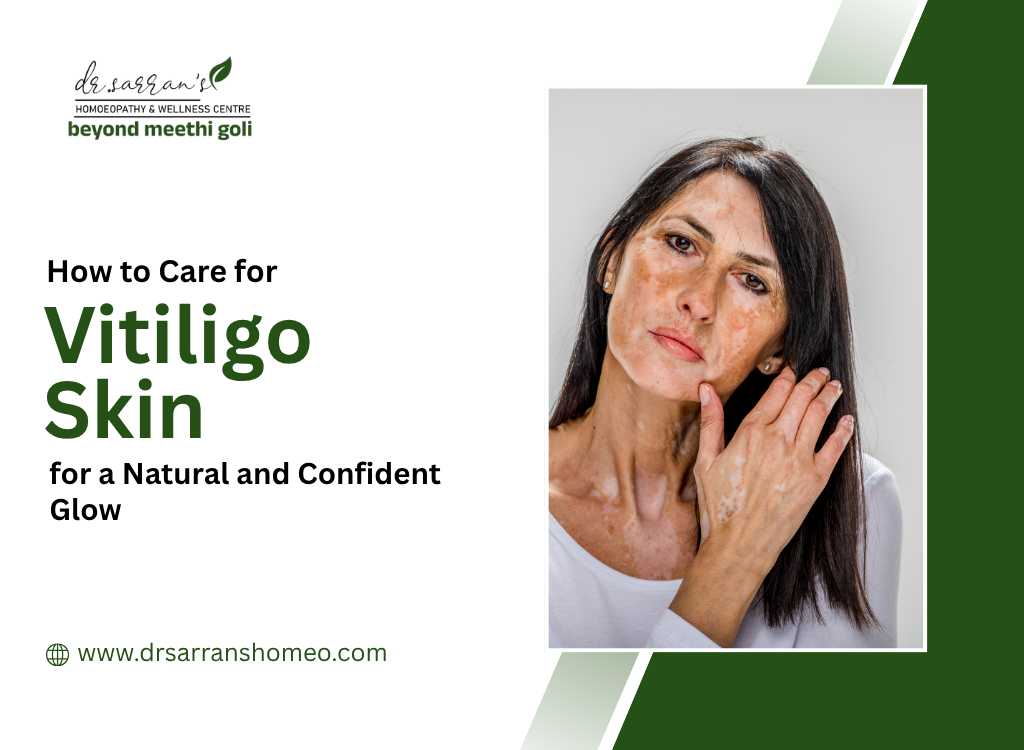
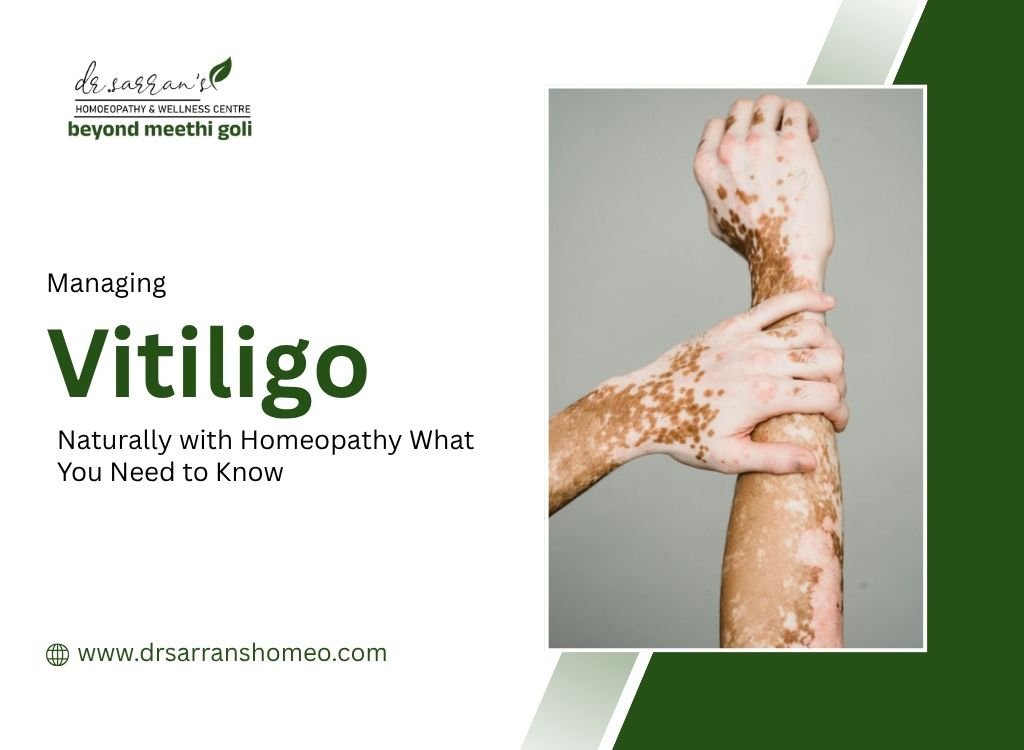
Vitiligo involves the loss of skin pigment due to melanocyte damage, and current research points to autoimmune, genetic, and environmental causes.
Allopathic treatment for vitiligo typically includes:
- Topical corticosteroids and calcineurin inhibitors
- Phototherapy, such as narrowband UVB treatment
- Newer JAK-inhibitor creams for select cases
- Surgical options like skin grafting for stable, resistant patches
These treatments have more robust clinical research supporting repigmentation, particularly for facial areas.
Homeopathic treatment for vitiligo focuses on:

- Supporting overall immune balance
- Personalised remedy selection based on your specific pattern
- Long-term, low-side-effect management
- Emotional and psychological support alongside physical treatment
For vitiligo specifically, allopathy currently has stronger clinical evidence for visible repigmentation, while homeopathy is often used as a supportive, complementary option, particularly for patients seeking gentler, long-term care alongside dermatology guidance.
Homeopathy vs Allopathy: Direct Comparison Table
| Factor | Homeopathy | Allopathy |
| Approach | Whole-person, constitutional | Targeted, disease-specific |
| Speed of relief | Gradual | Often faster, especially for flares |
| Side effects | Generally minimal | Varies, steroid side effects possible with long-term use |
| Evidence base | Limited clinical research | Stronger evidence for both eczema and vitiligo |
| Best suited for | Long-term, supportive, maintenance care | Acute flare control, active repigmentation |
| Regulation in India | AYUSH-regulated, licensed BHMS doctors | Regulated by Medical Council/NMC |
This comparison shows why so many dermatology patients and homeopathic doctors now recommend an integrated approach rather than choosing just one system.
Why an Integrated Approach Often Works Best
Rather than framing homeopathy vs allopathy as a strict either-or decision, many patients benefit from combining both under professional guidance.
- Use allopathic treatment for fast control during active flares or aggressive vitiligo spread.
- Use homeopathy for long-term maintenance, reducing recurrence, and minimising side effects from prolonged medication use.
- Share your full treatment history with both doctors to avoid interactions or conflicting advice.
- Set realistic expectations, since chronic skin conditions rarely have an instant, permanent fix in either system.
This balanced approach reflects how modern skin homeopathic treatment in Mumbai is increasingly practised, working alongside dermatology rather than in isolation.
Key Benefits Patients Report From Homeopathic Skincare
While allopathy remains essential for certain situations, patients continue choosing homeopathic skincare support for specific advantages.
- Gentle, long-term use: Suitable for extended treatment without significant side effect concerns.
- Personalised care: Remedies matched to your unique symptom pattern and triggers.
- Whole-body focus: Considers stress, diet, and immune health alongside skin symptoms.
- Supportive role: Works well alongside conventional treatment for a more complete plan.
- Reduced reliance on steroids: Appeals to patients concerned about long-term topical steroid use.
Why Choose Dr. Sarran Dhillon Homeopathy Clinic for Chronic Skin Conditions

If you are searching for the best homeopathy doctor in Mumbai for eczema, vitiligo, or other chronic skin concerns, honest guidance about both systems matters as much as the treatment itself.
As a trusted homeopathy clinic in Juhu, Dr. Sarran Dhillon Homeopathy Clinic focuses on:
- Detailed case history to understand your specific skin condition and triggers
- Transparent conversations about what homeopathy can and cannot achieve
- Coordination with dermatologists when combined care is the better path
- Personalised, long-term treatment plans built around realistic goals
Patients seeking skin care homeopathic in Juhu consistently choose our clinic for this balanced, patient-first approach. As an experienced homeopathy doctor in Juhu, Dr. Sarran Dhillon provides homeopathic skincare treatment in Juhu designed to work well alongside, not against, conventional dermatology care when needed.
How to Decide What Is Right for You
Consider the following before choosing your treatment path:
- Is your condition mild and stable, or severe and rapidly progressing?
- Do you need fast relief for an active flare-up right now?
- Are you looking for gentle, long-term maintenance support instead?
- Are you open to combining both systems under professional guidance?
- Have previous treatments caused side effects you want to avoid going forward?
Your answers can help guide a conversation with both a dermatologist and a homeopathic doctor about the most suitable plan.
Frequently Asked Questions
Is homeopathy or allopathy better for eczema flare-ups?
Allopathy generally provides faster relief during active eczema flare-ups, while homeopathy is often used for longer-term, gentler maintenance between flares.
Can homeopathy and allopathy be used together safely?
Yes, many patients combine both approaches under professional guidance, though it is important to inform both doctors about your complete treatment plan.
Which is better for vitiligo, homeopathy or allopathy?
Allopathy currently has stronger clinical evidence for visible repigmentation, while homeopathy is often used as a supportive, long-term option alongside dermatology care.
Does homeopathy have fewer side effects than allopathy?
Homeopathic remedies are generally gentle with minimal side effects, while some allopathic treatments, particularly long-term steroid use, carry a higher risk of side effects like skin thinning.
How do I know which treatment approach is right for my skin condition?
The right choice depends on your condition’s severity, your treatment goals, and your comfort with gradual versus faster results, which is best discussed with both a dermatologist and a homeopathic doctor.
Conclusion
So, in the homeopathy vs allopathy debate, which is truly better for chronic skin conditions like eczema and vitiligo? The honest answer is that both have genuine strengths, and the best results often come from combining them thoughtfully rather than picking one exclusively. Allopathy tends to offer faster, evidence-backed relief for active flares and repigmentation, while homeopathy supports gentle, long-term, whole-body management with minimal side effects.
Ready to Find the Right Approach for Your Skin?
If you are weighing homeopathy vs allopathy for your eczema, vitiligo, or other chronic skin condition, book a consultation at Dr. Sarran Dhillon Homeopathy Clinic in Juhu, Mumbai, today. Get an honest, personalised assessment of the best path forward for your skin health.