
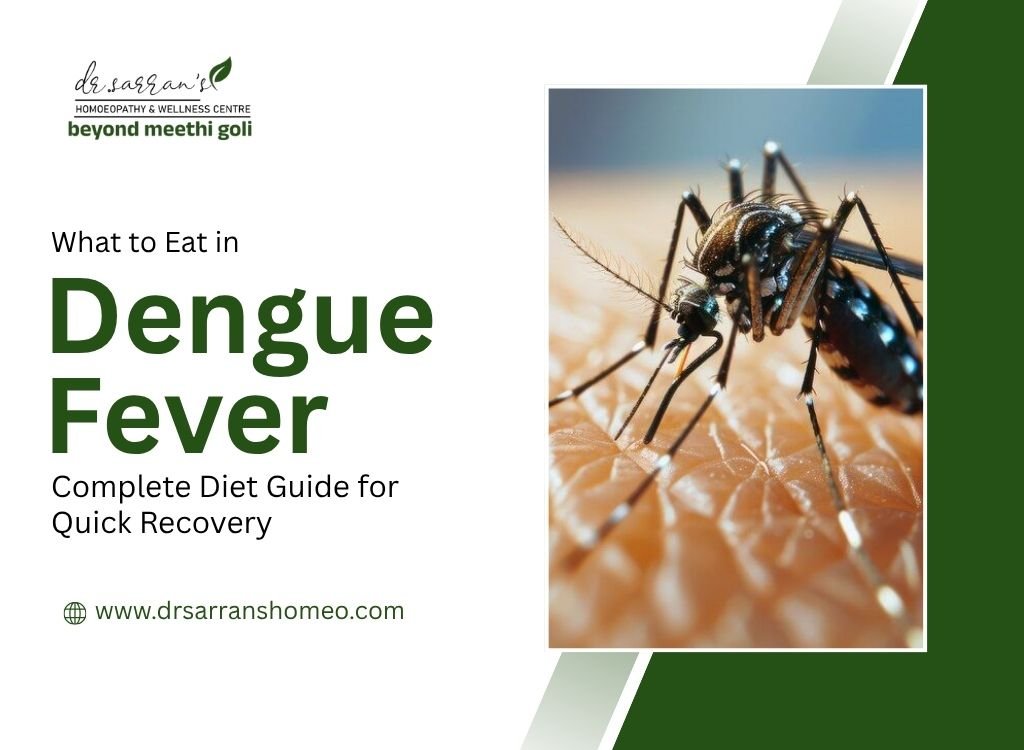
Dengue fever is one of the most common viral illnesses in India during the monsoon season. It spreads through the bite of the Aedes mosquito and causes high fever, intense joint pain, skin rashes, and a sharp drop in platelet count. Left unmanaged, it can lead to serious complications.
Dengue fever homeopathy treatment in Mumbai has helped many patients recover safely and completely. Dr. Sarran, widely regarded as the best homeopathy doctor in Malad West, has treated dengue patients for years. He consistently observes that patients who follow a proper dengue diet plan alongside homeopathic medicines recover faster and with fewer complications.
Diet during dengue is not about eating more. It is about eating right. The body needs easily absorbed nutrients, consistent hydration, and foods that actively support platelet production. This guide provides a complete, expert-backed dengue nutrition guide for patients and caregivers.
Why the Right Diet Is Critical During Dengue Fever
When the body is fighting a viral infection like dengue, the digestive system slows down significantly. Heavy or hard-to-digest foods add unnecessary stress to an already burdened system. This can delay recovery and worsen symptoms like nausea and stomach discomfort.
A proper dengue fever treatment diet serves multiple purposes at the same time. It maintains fluid and electrolyte balance. It provides micronutrients that support the immune system. It reduces internal inflammation. And it helps the body produce and protect platelets, which drop dangerously during dengue infection.
An immunity-boosting diet for dengue is not a new concept. Doctors and nutritionists across India have recommended specific foods for dengue patients for decades. What makes Dr. Sarran’s approach at his homeopathy clinic in Malad West different is that dietary advice is personalised. It is matched to the patient’s constitution, symptoms, and stage of recovery.
Best Foods to Increase Platelet Count in Dengue Fever
The most searched concern during dengue recovery is platelet count. A fall in platelets is what makes dengue dangerous. The best foods to increase platelet count in dengue fever are those that provide the right vitamins, minerals, and antioxidants in a form the body can absorb quickly.
Here are five key foods that Dr. Sarran recommends at his dengue fever homeopathy treatment in Malad West consultations:
- Papaya leaf juice supports platelet production through its active enzymes. It is one of the most widely used natural remedies for dengue in South and Southeast Asia.
- Pomegranate is rich in iron and antioxidants. It helps maintain healthy blood cell levels and reduces oxidative stress during infection.
- Coconut water provides natural electrolytes, including potassium and magnesium. It hydrates the body gently without stressing the kidneys or digestive tract.
- Kiwi and guava are high in Vitamin C. This vitamin strengthens the immune response and helps the body fight viral infections more effectively.
- Spinach and methi leaves contain Vitamin K and folate. These two nutrients are directly involved in platelet health and blood clotting function.
These fruits recommended for dengue are widely available, affordable, and clinically supported. They form the backbone of any effective dengue nutrition guide.
What to Eat and Avoid During Dengue Recovery at Home
Understanding what to eat and avoid during dengue recovery at home is one of the most practical things a caregiver or patient can do. Here is a comprehensive table to guide daily food choices.
| Food Category | Recommended Foods | Foods to Avoid |
| Fluids | Coconut water, ORS, herbal teas, fresh juices | Caffeinated drinks, alcohol, and carbonated sodas |
| Fruits | Papaya, pomegranate, kiwi, guava, banana | Excess raw citrus, unripe, or acidic fruits |
| Vegetables | Boiled pumpkin, bottle gourd, spinach, carrots | Raw salads, spicy curries, heavy gravies |
| Proteins | Boiled eggs, moong dal, soft lentil soup | Fried meats, heavy non-vegetarian dishes |
| Grains | Rice porridge, khichdi, idli, plain rice | Bread, maida-based snacks, fast food |
| Fats and Oils | A small amount of ghee in cooked food | Deep-fried snacks, oily or processed foods |
| Dairy | Plain curd in small amounts, warm milk | Full-fat paneer, heavy cream, ice cream |
This diet chart for a dengue patient for fast recovery is practical and easy to follow at home. Every food recommendation in this table is chosen for digestibility, nutritional value, and its ability to support the immune system during viral infection.
Hydration in Dengue Fever: Why It Cannot Be Ignored
Hydration in dengue fever is not just one part of recovery. It is the foundation of the entire recovery process. Dengue causes significant fluid loss through fever, sweating, and reduced appetite. Without consistent fluid intake, dehydration sets in quickly and can lead to complications.
Patients should drink fluids throughout the day in small, regular amounts. Coconut water is ideal because it replenishes electrolytes naturally. Herbal teas made from tulsi and ginger reduce fever and calm nausea. Plain warm water with a pinch of rock salt and lemon is a simple oral rehydration solution that works well at home.
Very cold drinks should be avoided. They can trigger throat discomfort and put extra stress on a weakened digestive system. Room temperature or warm fluids are always the better choice during active dengue infection.
Dr. Sarran counsels every patient at the homeopathy clinic in Malad West on fluid intake as part of their dengue fever homeopathy treatment. Hydration and homeopathic medicines work together to reduce fever duration and support platelet recovery.
Dengue Fever Homeopathy Treatment in Mumbai: Complete Supportive Care
Dengue fever homeopathy treatment is recognised as an effective supportive approach for managing symptoms and supporting recovery. Homeopathic medicines do not replace conventional emergency care when it is needed. But for moderate dengue cases managed at home, they provide significant relief.
Dr. Sarran uses constitutional remedies tailored to each patient’s specific symptom picture. Eupatorium Perfoliatum is commonly used for the characteristic bone pain and high fever of dengue. Crotalus Horridus is considered in cases of very low platelet count. Rhus Toxicodendron is helpful for joint pain and skin rash.
Patients searching for a dengue fever homeopathy doctor near me in Mumbai can trust Dr. Sarran’s clinic for comprehensive care. Dengue fever homeopathy treatment in Malad West at his clinic combines targeted homeopathic prescriptions with personalised dietary and hydration guidance.
Natural Foods to Recover Quickly from Dengue Fever
Beyond the well-known platelet-boosting foods, several everyday kitchen items serve as natural foods to recover quickly from dengue fever. These are simple, accessible, and highly effective.
Turmeric milk reduces internal inflammation and supports the immune system. Ginger tea calms nausea, which is common in dengue patients during the acute phase. Moong dal khichdi is considered one of the best complete meals during recovery. It is light, protein-rich, nutritious, and very easy to digest.
Fresh coconut water with a small pinch of rock salt helps restore electrolytes lost through fever and sweating. These home diet tips for dengue patients to boost immunity do not require supplements or special products. They are rooted in everyday Indian food culture and are available in every household.
Case Study
Priya came to Dr. Sarran’s clinic during the monsoon with a persistent high fever, severe fatigue, and a rapidly falling platelet count. She was frightened and considering hospitalisation. Dr. Sarran assessed her carefully and started her on dengue fever homeopathy treatment alongside a structured dengue diet plan that included papaya leaf juice, coconut water, moong khichdi, and pomegranate juice. Within four days, her fever reduced. Her platelet count stabilised by the seventh day. She recovered completely at home without needing hospital admission. Her husband noted that her appetite and energy returned much faster than expected.
FAQ’s About Dengue Fever Homeopathy
Q1. What is the best food to eat during dengue fever?
Papaya leaf juice, coconut water, pomegranate, and light khichdi are the top recommended foods during dengue recovery.
Q2. Can homeopathy help treat dengue fever effectively?
Yes, dengue fever homeopathy treatment reduces fever, manages pain, and supports platelet recovery without harmful side effects.
Q3. How much fluid should a dengue patient drink each day?
Dengue patients should drink fluids regularly throughout the day to prevent dehydration and support stable platelet levels.
Q4. Is papaya leaf juice scientifically supported for dengue?
Yes, papaya leaf juice is widely recommended by practitioners for supporting platelet production during dengue infection.
Q5. What foods must be strictly avoided during dengue fever?
Fried foods, spicy meals, caffeinated drinks, alcohol, and heavy non-vegetarian dishes must be avoided during dengue recovery.
Q6. Can a dengue patient eat rice and dal during recovery?
Yes, plain rice and moong dal khichdi are among the best meals during dengue. They are light and easy to digest.
Q7. How many days does it take to recover from dengue with the right diet?
Most dengue patients recover within seven to ten days when the right diet and proper medical care are followed consistently.
Q8. Where can I find a trusted dengue fever homeopathy doctor near me in Mumbai?
Visit Dr. Sarran’s homeopathy clinic in Malad West, Mumbai, for expert dengue fever homeopathy treatment and personalised dietary support.
Conclusion
Dengue fever recovery is a combination of the right medical care, consistent hydration, and a well-planned diet. Dengue fever homeopathy treatment in Mumbai at Dr. Sarran’s clinic brings all three together into one personalised care plan.
From platelet count boosting foods to warm, easy-to-digest meals, every dietary choice you make during dengue either supports or slows your healing. Choose light, nourishing foods. Stay hydrated. Follow expert guidance. And trust that your body, given the right support, can recover fully and quickly.